
How to Discover New Music Without Infinite Scroll
Use credits, label catalogues, local scenes and three-candidate limits to discover new music without surrendering to infinite scroll.
7 min readStart with a sound, a scene, or a question. Every route below is designed to create a useful next listen, not an infinite scroll.
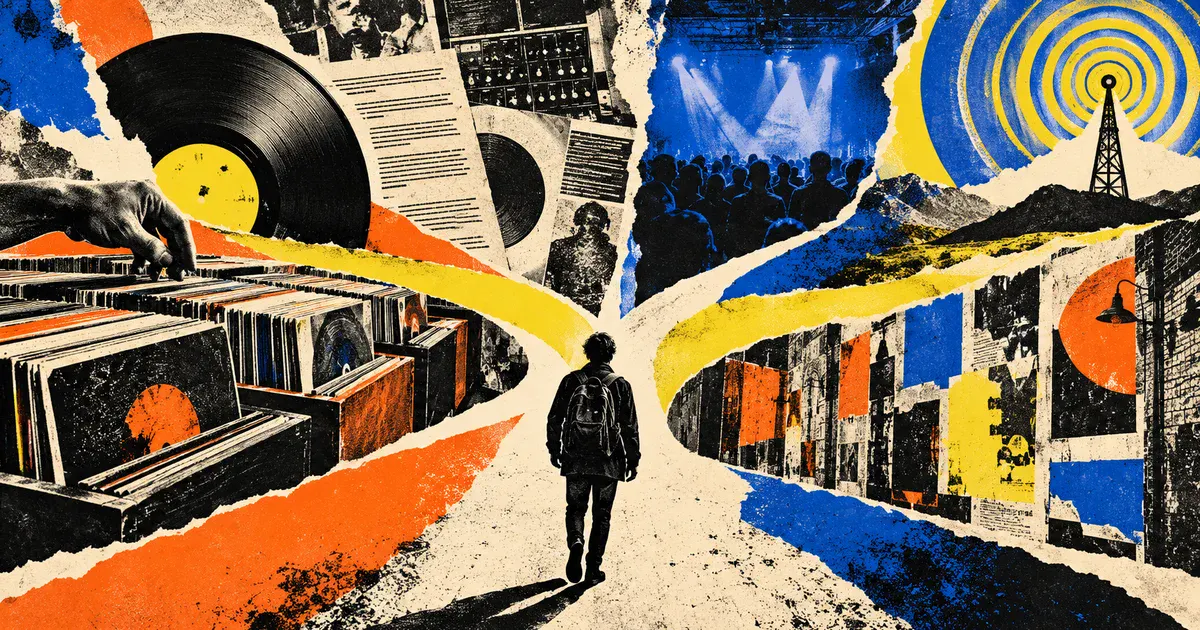
Use credits, label catalogues, local scenes and three-candidate limits to discover new music without surrendering to infinite scroll.
7 min readMap genres by lineage, scene and musical trait without pretending the borders are fixed.
9 min readCompare human and algorithmic music recommendations by novelty, fit, explanation and what you actually replay after a week.
6 min readTurn one audible contribution into a bounded discovery trail without confusing release, recording and work credits.
8 min readUse catalogue numbers, release windows and recurring collaborators to find meaningful connections across a label.
7 min readReconstruct a scene through venues, bills, radio, shops and participants without reducing it to a genre label.
9 min readDiscovery becomes useful when a recommendation carries a relationship you can verify and a reason you can hear.
Begin with one recording, contributor, label, venue or question that you can describe precisely.
Follow one credit, catalogue, scene or influence connection. Do not mix relationship types without labeling them.
Stop at three candidates, hear one track from each, and select one full release with a written reason.
| Route | Best question | Evidence |
|---|---|---|
| Credit | Who helped make this sound? | Liner notes and recording relationships |
| Label | What connects this release community? | Catalogue numbers, dates and recurring staff |
| Scene | How did people and places interact? | Bills, venues, oral histories and local media |
| Influence | What musical idea travelled? | Artist statements plus audible comparison |
Start from one favorite track. Produce three candidates through three different relationships, then explain which route taught you the most even if it did not produce your favorite song.
When a recommendation begins with a person, edition or label, continue through Music Credits, Releases and Catalogue Research to verify the objects behind the connection.
After choosing the next record, How to Listen to Music Better provides repeatable methods for hearing it rather than returning immediately to search.