
How to Verify Music Credits Without Guessing
Triangulate liner notes, official disclosures and structured databases while preserving uncertainty.
9 min readMusic research becomes reliable when names, works, recordings and releases are kept separate. Use identifiers and first-party evidence, and leave ambiguity visible.
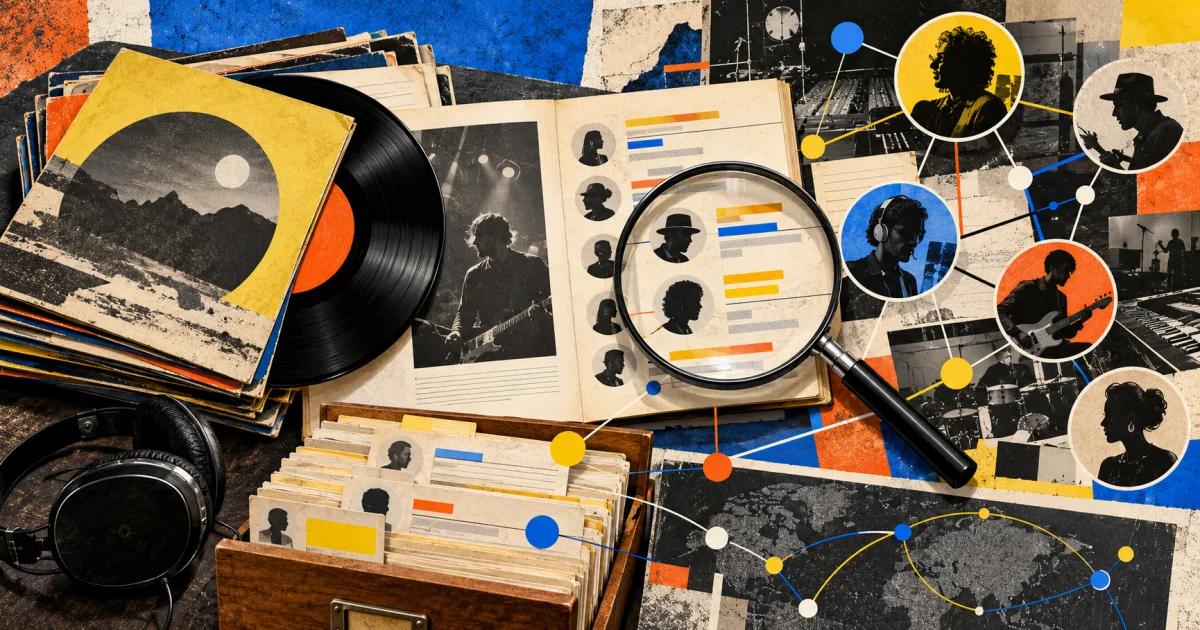
Triangulate liner notes, official disclosures and structured databases while preserving uncertainty.
9 min readTell release, release group, reissue, remaster and remix apart before comparing sound or collecting editions.
8 min readClassify musical relationships by what is reused: composition, recording, performance, audio material or arrangement.
9 min readThese historical LISTN.TO URLs have passed the identity, sourcing and original listening-path review required for indexation.
Architects guided listening profile: Compare three catalogue eras using official discography and chart evidence.
Belphegor guided listening profile: Trace production and arrangement changes across three releases using artist and label sources.
A song, a specific recording, an album concept and a particular commercial edition are different objects. Many catalogue mistakes begin when those layers are collapsed.
Decide whether you are documenting a person, group, work, recording, release group, release or label.
Prefer an MBID, ISRC, ISNI, catalogue number or barcode over a display name alone.
Compare liner notes or an official source with a structured database. Record disagreement instead of silently choosing.
| Object | What remains the same | What can differ |
|---|---|---|
| Work | Underlying composition | Arrangement, performer, recording |
| Recording | A particular captured performance | Mastering and release context |
| Release | Specific issued edition | Country, date, label, barcode, track list |
Take one album you own and record the exact title, artist credit, label, catalogue number, country and barcode. Compare it with one streaming listing and note every field the streaming page omits.
Once a credit, edition or relationship is verified, Discover Music Beyond the Algorithm turns it into a focused next-listen decision.
After the catalogue work identifies the correct recording, use How to Listen to Music Better to examine the music itself.