
How to Read a Setlist as a Performance Arc
Analyze opening strategy, energy runs, resets, transitions and encores without reducing a show to song order.
8 min readA concert is a sequence, a room and a social event. These guides help you notice how all three shape what reaches the listener.
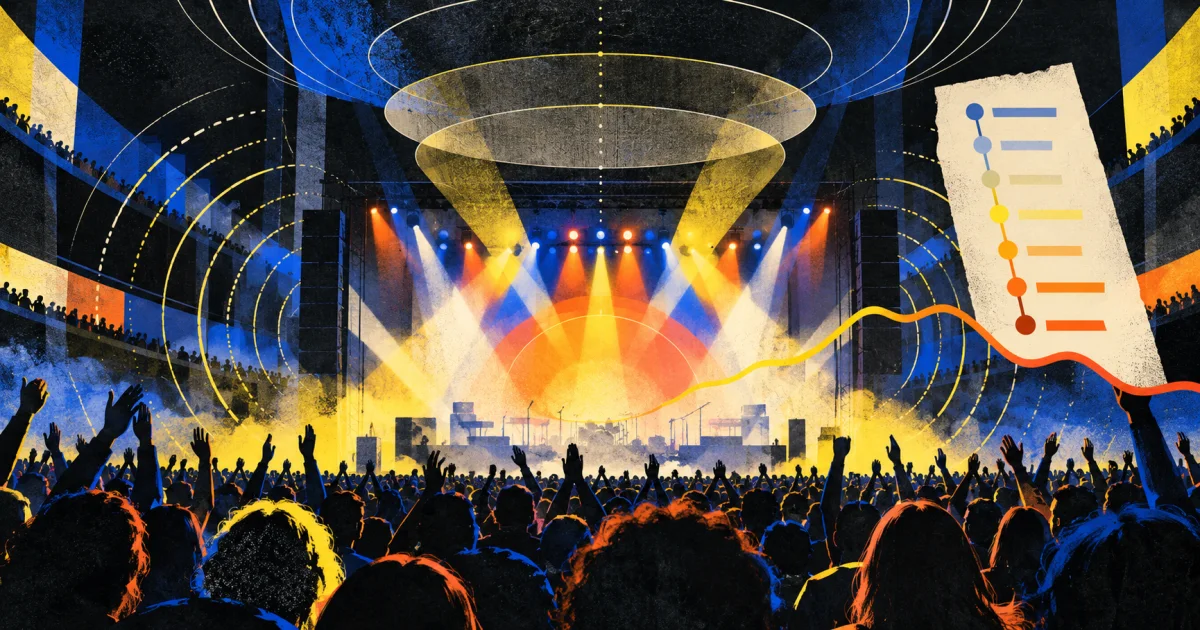
Analyze opening strategy, energy runs, resets, transitions and encores without reducing a show to song order.
8 min readUnderstand direct sound, reflections, low-frequency variation and listening position without blaming every problem on the mix engineer.
8 min readCompare a live version with its studio recording by separating arrangement, performance, room sound and post-production.
8 min readA live performance includes pacing, transitions, audience response, room reflections and technical constraints. Each changes the meaning of familiar material.
Learn the venue layout, protect your hearing, and choose one question rather than predicting every song.
Notice transitions, spoken resets, arrangement changes and how the room responds at different intensities.
Write the sequence from memory before checking a published setlist. Memory reveals which structural moments registered.
| Variable | At the show | On a live recording |
|---|---|---|
| Position | Changes direct and reflected sound | Chosen by recording and mix |
| Audience | Physical and unpredictable | Selected and balanced in production |
| Sequence | Experienced once in real time | Can be paused, repeated or edited |
At your next show, move only if it is safe and permitted. Compare thirty seconds from two positions, naming changes in vocal clarity, low-frequency balance and room reflection.
For hearing protection and controlled playback questions that continue beyond the venue, use Audio Formats and Hearing Guides.
When comparing a concert memory with a released recording, Music Recording, Mixing and Production provides language for depth, dynamics and balance.